
Pinhole approach
Reposition existing tissue
Small access opening; usually no palatal donor site. Suitability depends on the anatomy and available tissue.
Periodontal care · Seoul, Korea
Concerned about receding gums, exposed roots or a changing smile? Explore gum grafting and the Pinhole technique with Dr. Hosan Park.
U.S. board-certified periodontist · Columbia-trained
When to seek advice
Do your teeth look longer? Have you noticed exposed roots or sensitivity near the gumline? These concerns deserve an assessment of the supporting tissues, not just the appearance of the teeth.
Root coverage treatment aims to protect exposed roots and improve the gum contour. It may also help reduce sensitivity. First, we consider why the recession occurred and how to keep the area healthy. [1]
Ask the team about your gum concerns ↗The Pinhole technique
Pinhole is a minimally invasive root coverage approach that moves existing gum tissue over exposed roots, without harvesting a graft from the palate. [2]
Through a small opening, specially designed instruments gently release the tissue so it can be repositioned. Collagen material may help support the new position. It generally avoids conventional releasing incisions and sutures, but it is still a surgical procedure.
Dr. Park evaluates whether this approach—or a conventional graft—fits your tissue and the pattern of recession. A smaller access point does not make every case suitable, nor does it remove the need for careful recovery.
Pinhole approach
Small access opening; usually no palatal donor site. Suitability depends on the anatomy and available tissue.
Conventional gum graft
Uses a tissue graft to cover roots or increase tissue thickness. It remains an important option when additional tissue is needed.
Published research includes retrospective and long-term case series in selected patients. These findings do not establish that Pinhole is superior for every patient. Discuss the evidence and alternatives at your consultation. [2, 3]
Clinical documentation
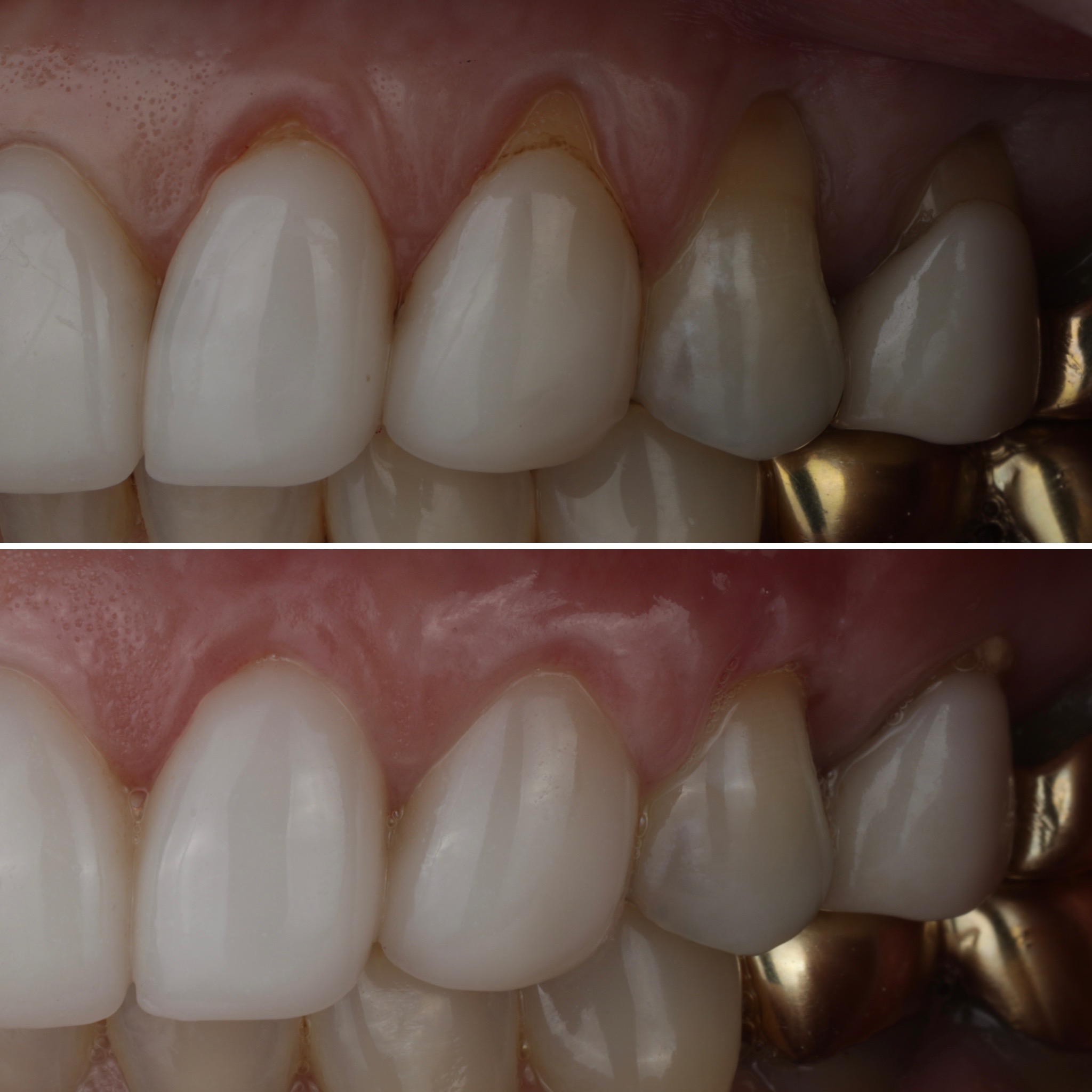
Examples of root coverage care, not a promise of your result. These photographs are not presented as Pinhole-specific cases. Open a case to see the full image.
Timing, lighting and photographic angles may differ. Your likely outcome and appropriate technique require an examination.
From first question to follow-up
Start with a video call or contact the team. We can discuss symptoms, priorities and the records useful for your visit.
An in-person periodontal examination guides the options, expected coverage, risks, fees and timing.
Follow a personalised recovery plan and attend reviews. Long-term maintenance matters as much as the procedure.
Before you decide
No. Pinhole treatment releases and repositions existing gum tissue through a small opening, often with collagen support. Conventional grafting adds tissue, which may come from the palate or a donor source. The best approach depends on your examination—not a preference for one technique.
An examination assesses the pattern of recession, gum thickness, bone and support between the teeth, oral hygiene and inflammation. Active disease needs to be addressed first. Some sites are better suited to a graft or another approach; complete root coverage is not always achievable.
Treatment is usually performed with local anaesthesia. Discomfort, swelling, bruising or bleeding can occur afterwards, even with a minimally invasive approach. Healing varies with the extent of treatment and your health. You will receive individual instructions on cleaning, eating and follow-up.
Results can be maintained, but recurrence is possible. Long-term stability depends on factors such as tissue support, gentle cleaning, control of inflammation and follow-up. No technique can guarantee permanent or complete coverage.
Possible risks include bleeding, infection, discomfort, incomplete root coverage, changes in appearance and recurrent recession. A graft may also involve discomfort at the donor site. Your consultation will cover the risks relevant to your situation and alternatives, including monitoring where appropriate.
A video consultation can help discuss your concerns and plan an in-person assessment. Photographs cannot confirm eligibility or replace an examination. Ask the team about the expected appointments and follow-up before booking treatment-related travel.
The fee depends on the number and condition of the sites, the technique and any preparatory care. After assessment, you will receive a personalised plan and quote before deciding whether to proceed.
Start with a conversation
Tell us what you have noticed and what you hope to improve. We will help arrange a consultation and explain what an in-person assessment involves. There is no need to choose a technique before you speak with us.
Measured advice
02Transparent quote
03Private follow-up
This page provides general education, not an individual diagnosis or treatment recommendation.